Can you actually make something go viral on TikTok?
The honest answer is no.
There is no formula that guarantees 10 million views, no magic combination of hashtags, posting times and trending sounds that can manufacture cultural relevance on command. But there are conditions that make content more likely to travel.
And sometimes, the best way to understand those conditions is to look at what happens when someone breaks almost every conventional rule. Enter Ellie Ellis.
The Ellie Ellis effect
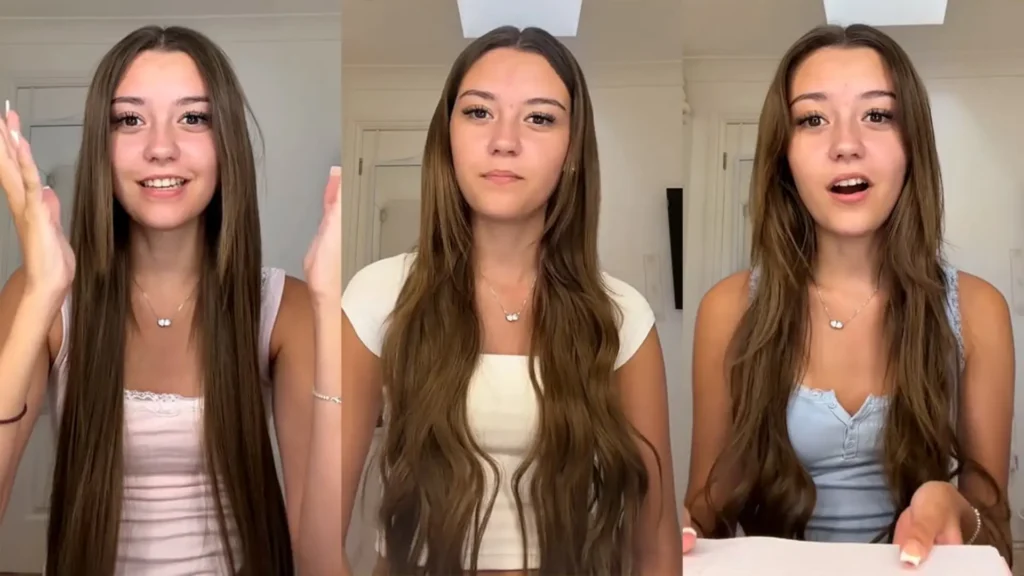
On August 9, 16-year-old British creator @ellielouiseellis uploaded what appeared to be an entirely ordinary TikTok: a roughly four-minute “Get Ready With Me.” There was no elaborate production. No spectacular transition. No obvious stunt. No carefully engineered controversy. And yet, the video exploded.
The post went on to generate more than 11.7 million views, while Ellie’s account went from just six followers to more than 700,000 in six days, according to figures reported around the account’s initial surge. Within just three days, she had reportedly passed 300,000 followers. Suddenly, the girl who had been virtually unknown on TikTok was attracting the attention of major beauty brands including Garnier and Maybelline, while established creators were publicly showing their support. What makes the story particularly interesting isn’t simply the size of the numbers.
It is why people connected with her in the first place. Ellie wasn’t presenting herself as a perfectly polished creator who had already figured out the TikTok playbook. She seemed nervous. Unfiltered. A little awkward. And, crucially, real. In an ecosystem increasingly saturated with perfectly lit bedrooms, scripted hooks, aggressive editing and increasingly elaborate attempts to capture attention, that lack of polish became the differentiator.
And for brands and creators, there is a much bigger lesson here.
The shift from advertising to entertainment
One of the biggest mistakes brands make on TikTok is starting with the brand rather than the audience. The process often begins with a question like: What do we want to communicate? The next question becomes: How can we turn that message into a TikTok?
But TikTok doesn’t work like a traditional advertising channel. People don’t open the app because they’re hoping to encounter another piece of branded communication. They open it to be entertained, surprised, inspired, informed or simply to spend a few minutes watching something they find interesting.
Ellie’s GRWM wasn’t successful because millions of people urgently needed to watch a new creator apply makeup. It worked because people wanted to spend time with her. That distinction is critical for brands working with creators.
The most effective creator campaigns don’t begin with, “How do we get the product into a TikTok?” They begin with, “What would this audience genuinely want to watch?” The product then becomes part of that story rather than the reason the story exists.
For brands, this means moving away from rigid product-led briefs and towards creator-led ideas. Give creators a clear campaign objective, the product truths that matter and the necessary guidelines, but allow them to find the format, tone and storytelling approach that feels natural to their audience.
The creator’s voice isn’t an obstacle to the campaign. It’s the asset you’re paying for.
Authenticity Isn't the Absence of Strategy
Ellie’s success might look completely spontaneous, but brands shouldn’t take away the message that the secret to TikTok is simply “don’t try.” Authenticity doesn’t mean having no strategy. It means that the strategy shouldn’t erase the personality that makes the creator interesting in the first place.
A creator can have a content strategy, a posting schedule, a commercial objective and a brand partnership while still sounding completely like themselves. In fact, the best creator campaigns often have a paradox at their centre: they are carefully planned behind the scenes, but feel completely unplanned when the audience watches them.
That’s the sweet spot.
This is also why simply instructing creators to “make it authentic” rarely works. Authenticity isn’t a production style that can be added to a brief. A deliberately messy video can feel just as artificial as a polished advertisement if the audience senses that the creator is playing a role.
Real authenticity comes from the relationship between the creator, the audience and the content.
The creator has to believe what they’re saying. The format has to make sense for them. The product has to have a natural role in the story. And, ideally, the audience should feel that the creator might have made the content even if the brand wasn’t paying them.
Don't Confuse Production Value With Attention Value
For years, marketers have been conditioned to associate better production with better content. Better camera. Better lighting. Better editing. Better graphics. But TikTok has complicated that equation.
Production quality can certainly improve content, but production value and attention value are two different things. A beautifully shot video that gives someone no reason to keep watching is still a bad TikTok. Conversely, a simple video filmed in a bedroom can become hugely engaging if the person, story or idea is compelling enough.
Ellie’s story is a useful reminder that the question isn’t necessarily “Does this look premium?”
It’s “Does this feel worth watching?”
For brands, that can be surprisingly liberating. The answer to declining engagement isn’t always a bigger production budget. Sometimes the solution is better creator selection, a stronger cultural insight or simply giving the creator enough freedom to make something that feels native to the platform.
Give Creators Room to Be Creators
This leads to one of the biggest differences between traditional advertising and influencer marketing: control. Traditional advertising is built around control. Brands determine the message, the visuals, the script and often the exact delivery.
Creator marketing works differently. The reason audiences follow a creator is precisely because they have developed a distinctive voice and personality. If a brand removes those characteristics in an attempt to control the content, it can end up removing the very value it was paying to access.
That doesn’t mean brands should abandon their guidelines. It means the brief should define the destination without dictating every step of the journey. The most effective creator briefs typically establish the campaign objective, the key product message, mandatory requirements and brand guardrails, while leaving the creator enough room to decide how the story should actually be told.
The goal isn’t to make a creator sound like your brand. The goal is to make your brand fit naturally into their world.
The Real-Time Opportunity: Being Ready When Culture Moves
There is another lesson in Ellie’s story that is particularly relevant to influencer marketing teams: speed matters. When an unknown creator suddenly begins attracting millions of views, the opportunity isn’t necessarily to immediately throw a huge budget at them. The first opportunity may simply be to notice.
Follow the creator. Watch the content. Read the comments. Understand why the audience is responding. Look at whether their audience overlaps with your brand. Engage naturally. Start a relationship. Because by the time a creator has become impossible for everyone to ignore, the opportunity to be early has already passed.
This is increasingly becoming one of the biggest advantages an influencer marketing agency can offer brands: not simply access to creators, but the ability to identify momentum before it becomes obvious.
Traditional campaigns can take weeks or months to approve. Culture can change in a matter of hours. The brands that succeed on TikTok will increasingly be those that can combine strategic discipline with the ability to move at the speed of culture.
The opportunity isn't always the biggest creator
Perhaps the most valuable lesson in Ellie’s story is that she became interesting to brands before she became an established influencer. When she posted that first viral video, she didn’t have hundreds of thousands of followers. She didn’t have years of brand partnerships behind her. She didn’t have an established creator business.
She simply had something audiences were responding to. That distinction matters.
Influencer marketing has traditionally placed enormous emphasis on creator size: How many followers does this person have? What’s their average reach? How many views do they generate? Those metrics remain useful, but they don’t tell the whole story.
There is enormous value in identifying creators before they become obvious. An emerging creator can bring freshness, credibility and cultural relevance that a heavily commercialised account may struggle to replicate. Their audience may also feel a stronger sense of discovery and intimacy around them.
The challenge for brands is therefore no longer simply: “Which creators have the biggest audience?”
It is increasingly: “Which creators are about to matter?”
That requires a different kind of influencer strategy, one built around discovery, cultural intelligence and continuous monitoring rather than simply selecting names from an existing database.
The opportunity isn't always the biggest creator
Not exactly. And that’s perhaps the most important lesson of all.
There is no guaranteed formula for creating the next viral TikTok. What brands can do is create the environment in which unexpected success becomes more likely.
That means working with creators whose audiences genuinely trust them. Giving those creators enough freedom to use their own voice. Prioritising watchability over production polish. Building campaigns around what people want to consume rather than simply what brands want to say. And developing the agility to recognise and respond when cultural momentum starts to build.
Ellie’s story isn’t a formula for going viral. It’s a reminder that the most powerful creator content often doesn’t feel like marketing at all.
And perhaps that’s the real art of going viral on TikTok: not trying to manufacture a moment, but creating the conditions for people to create one for you.